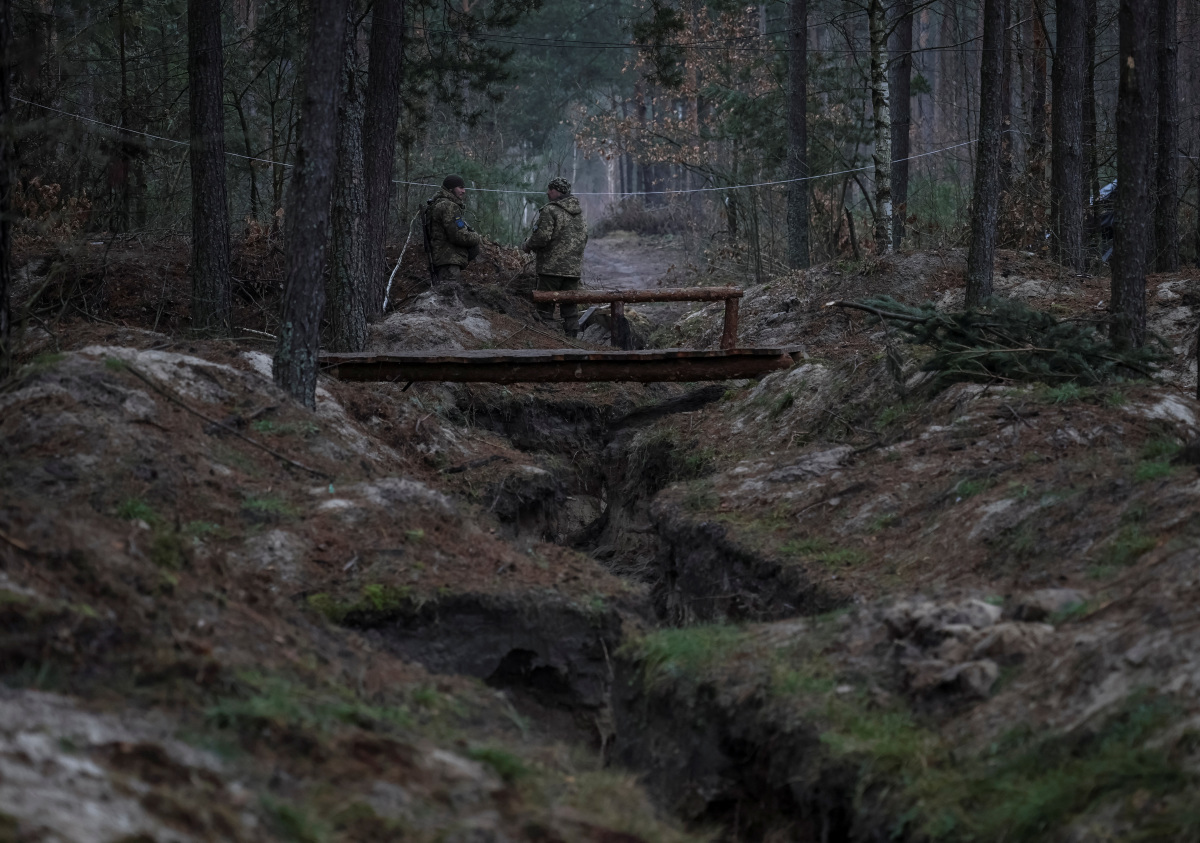
Swamps, marshes, mires, bogs, and fens are important parts of the natural landscape in Belarus. Vast swamplands historically covered the country, and currently there are around 2.5 million hectares of wetlands in Belarus. Notable swamp regions are Pinsk Marshes and Olmany swamps in Polesia and Yelnya Swamp in Vitebsk region.
Names
Swamps, marshes, mires, bogs, and fens are all usually called "Балота" (balota) in Belarusian, though there are many synonyms: Багна, Дрыгва, Гiжня, etc.
Current situation
In the early 20th century, almost 40% of the territory, 8 million hectares, were wetlands. Around 2.56 to 2.94 million hectares were swamps and marshes (more than 12% of Belarus's territory). Today, about 4% of the territory is swamps, or 863 thousand hectares. Over half of Belarus's swamps were drained for agricultural and forestry purposes between the 1960s and 1970s, leading to loss of biodiversity, increased droughts and frosts, and depleted groundwater levels in some areas. Efforts to revive and rehydrate drained peatlands in order to restore their ecological functions began in the 2010s.
There are 9,192 swamps in Belarus. Low type peat deposit area is 81.6% (2,103.800 ha), transitional area is 3.4% (106.200 ha), and high one is 15.0% (333.700 ha). Yelnya Swamp, one of the oldest swamps, was formed about 13,000 years ago.
History of wetland irrigation
The land improvement by irrigation of wetlands in Belarus has a long history, going back to the Western Swamp Drainage Reclamation Expedition (1872–1902) (Russian: Западная экспедиция по осушению болот) under the direction of General Iosif Zhilinsky. This massive project constructed thousands of kilometers of drainage canals throughout Polesia, converting swamps into meadows, arable land, and timber transport waterways. While innovative for its time, it disrupted the natural hydrology of the region. Around 410,000 hectares of swamps were drained.
In 1911, the Minsk Experimental Swamp Station (Russian: Минская опытная болотная станция) was opened, under its first director botanist Aleksandr Flerov. It started research on the Komarovskoe swamp in Minsk. By the late 1920s, this swamp covering 218 hectares had been completely drained after works began in 1925. In 1930, the station became the All-Union Research Institute of Soil Science and Amelioration, with a goal of systematically studying the wetlands of the Soviet Union.
Belarus has one of the world's largest deposits of peat. Peat has been mined industrially since 1896, and in Soviet times it was the main fuel for power plants.
Large-scale swamp draining efforts were revived in the Soviet era during the 1960s–1970s, with over 60% of Belarus's wetlands being drained, primarily for agriculture and peat mining. Though increasing production in the short term, severe disruption of wetland ecosystems led to soil degradation, groundwater depletion, biodiversity loss, and local climate changes.
- Amelioration of the Komarovskoe swamp in Minsk, early 1920s
Reviving the swamps
Recognizing the important ecological roles that swamps play, including storing carbon, maintaining hydrological cycles, and providing habitat for flora and fauna, Belarus has made efforts since the 2010s to restore portions of its drained peatlands. This "rewetting" process involves techniques like blocking drainage canals to raise water tables.
International environmental organizations like the UN Development Programme have partnered with the Belarus government to fund and execute restoration projects on over 60,000 hectares of degraded peatlands so far. While still a small fraction of what was lost, these restored swamps aim to revive ecological functions and mitigate impacts like wildfires, greenhouse gas emissions, and biodiversity decline caused by draining.
Biodiversity
Belarus's swamps and wetlands host a diverse array of flora and fauna: 267 species of flowering plants and ferns, including 37 woody species, 167 herbaceous species, and 63 species of mosses. The wetlands provide habitat for over 50 valuable medicinal plants, as well as berry plants like cranberry, lingonberry, and bilberry. Rare and threatened species found here include insectivorous plants, sphagnum mosses, cotton grass, and plants listed in the Belarus Red Book. The wetlands are vital for conserving bird populations, sheltering significant portions of European populations of species like the aquatic warbler, black stork, white stork, lesser spotted eagle, and great snipe. Mammal species like elk, raccoon dog, and wolf also depend on these wetlands. Belarus has designated 20 potential territories of international and national importance, covering 2.9% of the country's area, to safeguard this exceptional biodiversity concentrated in fen complexes, bog complexes, river floodplains, forest–floodplain–lake mosaics, fishery ponds, and forests.
In culture
Swamps played a big role in Belarusian literature, with many authors writing about "swampy land" or "swampy country", like Yakub Kolas's novella The Morass ("Дрыгва", 1933), Yanka Maur's novella The Robinsons of Palesse ("Палескія рабінзоны", 1930), and Ivan Melezh's novel People on the Marshes ("Людзі на балоце", 1962). Uladzimir Karatkevich's novella King Stakh's Wild Hunt ("Дзікае паляванне Караля Стаха", 1964) is set in a swamp area. Swamps are often seen as a symbol of Belarus; swampy lands were the cheapest and their agricultural output was very poor, so the theme of melioration and developing a better land was popular in Soviet times. Belarusian poets described Polesia as the land of swamps and forests. In Victor Martinovich's 2013 novel, Sphagnum, Belarus is compared to a peat moss, sphagnum.
List of largest swamps
Source:
Map
See also
- Geography of Belarus
- Category:Swamps of Belarus in Belarusian Wikipedia
- Swamp draining in Belarus
- Ramsar sites in Belarus
References
Further reading
- Łotysz, Sławomir (2022). Pińskie błota: natura, wiedza i polityka na polskim Polesiu do 1945 roku (in Polish). Kraków: Towarzystwo Autorów i Wydawców Prac Naukowych Universitas. ISBN 978-83-242-6646-3.
- Book review: "Пинские болота и полешуки без сладких стереотипов". Наша Ніва (in Russian). 15 March 2023. Retrieved 30 May 2024.
- "Пра самую дзіўную польскую пустыню". YelnyaTrip (in Belarusian). Retrieved 30 May 2024.
- Markova, S.; Haponiuk-Winiczenko, K.; Zeliankevich, N.; Berniakovich, I.; Hočevar, A.; Kershaw, G. P. (2006). "Summary Reports". Environmental Role of Wetlands in Headwaters. NATO Science Series: IV: Earth and Environmental Sciences. 63. Springer Netherlands: 283–296. doi:10.1007/1-4020-4228-0_25. ISBN 978-1-4020-4226-3.
- Созинов, Олег; Груммо, Дмитрий (1 January 2020). Рамсарские территории Беларуси: «Болото Дикое» / Ramsar Site of Belarus: Dikoe Fen Mire. Retrieved 18 June 2024.
- Груммо, Д.Г.; Созинов, О.В.; Зеленкевич, Н.А. (2010). Флора и растительность ландшафтного заказника "Ельня". Минск: Нац. акад. наук Беларуси, Ин-т эксперименталь-ной ботаники. ISBN 978-985-6735-68-7.
- Joosten, Hans; Tanneberger, Franziska; Moen, Asbjorn, eds. (2017). Mires and peatlands of Europe: status, distribution and conservation. Stuttgart: Schweizerbart Science Publishers. ISBN 978-3-510-65383-6. Retrieved 18 June 2024.
- Козулин, Александр; Тановицкая, Нина; Бамбалов, Николай (2017). Болота Беларуси (PDF) (in Russian). Минск. Archived from the original (PDF) on 2018-01-27. Retrieved 18 June 2024.
{{cite book}}: CS1 maint: location missing publisher (link)
External links
- Database and map of Belarusian peatlands