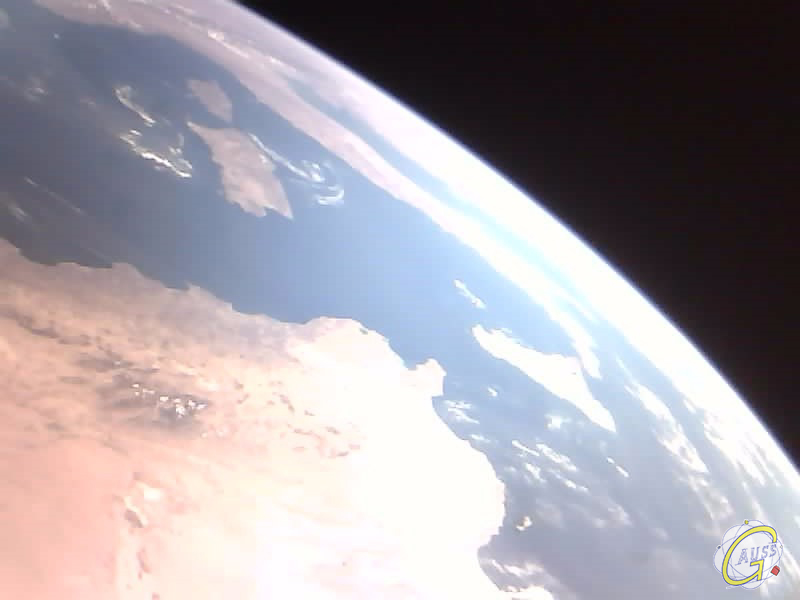
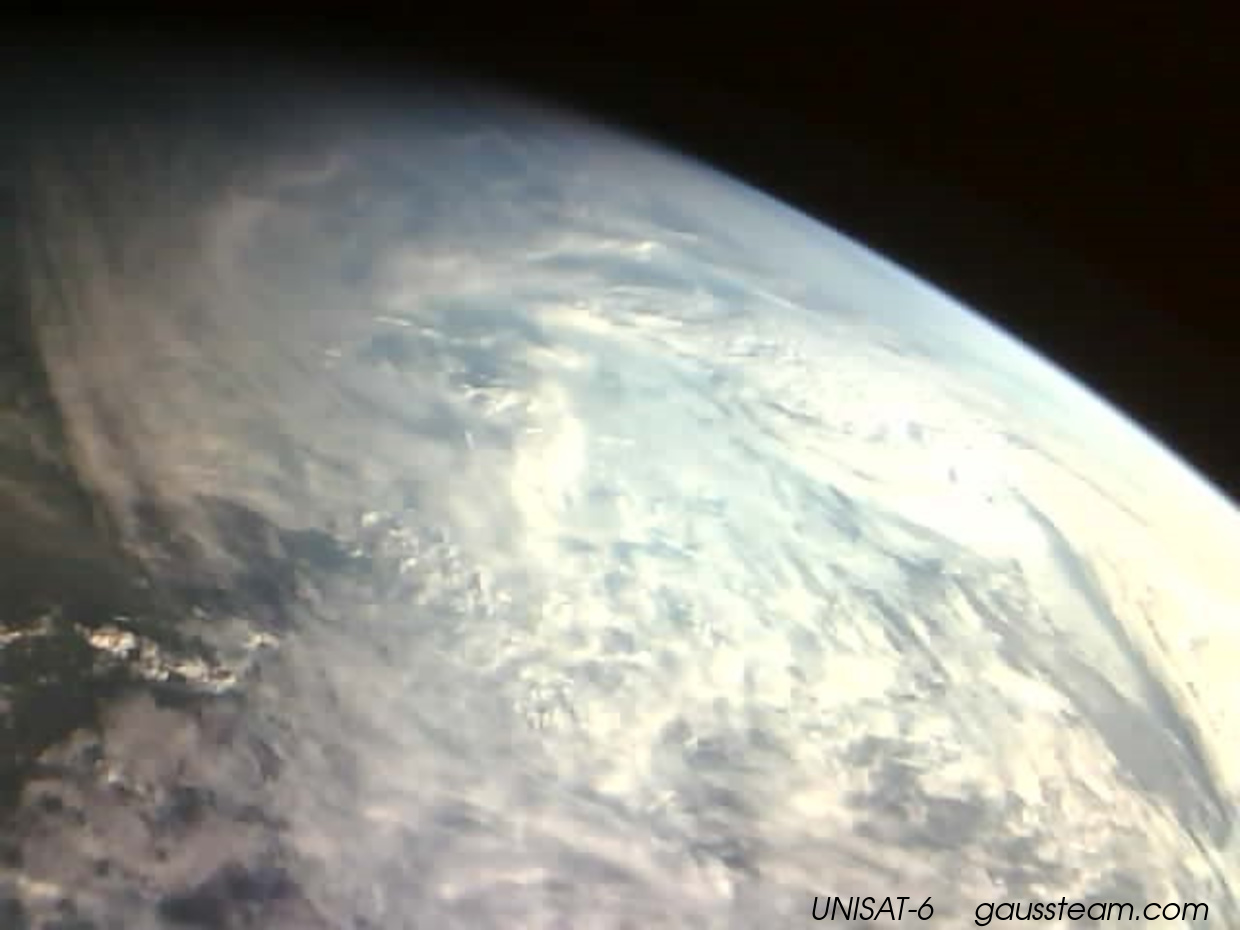
UniSat-6 is an Italian micro-satellite developed by GAUSS Srl and launched in 2014. The satellite is built in a 0.4x0.4x0.4m box-shaped bus, optimized for piggy-back launch. All instruments are powered by solar cells mounted on the spacecraft body, with maximal electrical power of 11W. The satellite has no on-orbit propulsion; it makes use of an attitude stabilization system based on permanent magnets.
Launch
UniSat-6 was launched from Dombarovsky (air base) site 13, Russia, on 19 June 2014 by a Dnepr rocket.
Mission
The satellite is intended primarily for technology verification in space, the main test piece being 3 deployment systems loaded with 4 CubeSat satellites, namely AeroCube 6, Lemur 1, ANTELSAT and TigriSat, with a total volume 9U. All sub-satellites were deployed 25 hours after achieving orbit, without incidents.
The satellite is also equipped with an on-board camera to take pictures of the release of the cubesats and for Earth Observation.
See also
- 2014 in spaceflight
References
External links